
Patient-152
No Medical Care and None of His Prescription Medications for 8 days at Sunrise Hospital
Patient-152 went to Dr. Edward Ashman at Nevada Orthopedic & Spine Center to discuss surgery on his knee. Patient says Dr. Ashman was in the room for only one minute, did not discuss the MRI, then said the surgery scheduler would come in to set a date for surgery. Patient went back to his primary care doctor and decided not to allow Dr. Ashman to do surgery because it would leave him with bone on bone.
Patient-152 went to Dr. Edward Ashman at Nevada Orthopedic & Spine Center.
Dr. Edward Ashman is the worse doctor ever!!
He came in the room and didn't even go over options or my MRI results.
He acted like he didn't care and cracked jokes about how I tore my knee and was literally in room for 1 min then said the surgery scheduler would be in to set up surgery date.
After that appointment, I went to my (primary) doctor who went over the MRI and my past history with surgery on same knee.
I decided not to do surgery because I don't have much Cartilage left, and if I did surgery, then I would have hardly any which would leave me with bone to bone and really bad arthritis!
Dr. Ashman was just wanting to do surgery without talking to me about it which really made me mad so I left and told the scheduler I wasn't having him touch my knee!
Unbelievable experience, and I definitely don't recommend Dr. AshBum!!
Patient-152 went to Dr. Edward Ashman at Nevada Orthopedic & Spine Center to discuss surgery on his knee. Patient says Dr. Ashman was in the room for only one minute, did not discuss the MRI, then said the surgery scheduler would come in to set a date for surgery. Patient went back to his primary care doctor and decided not to allow Dr. Ashman to do surgery because it would leave him with bone on bone.
Just say NO to Nevada Orthopedic
and just say NO to Dr. Edward Ashman
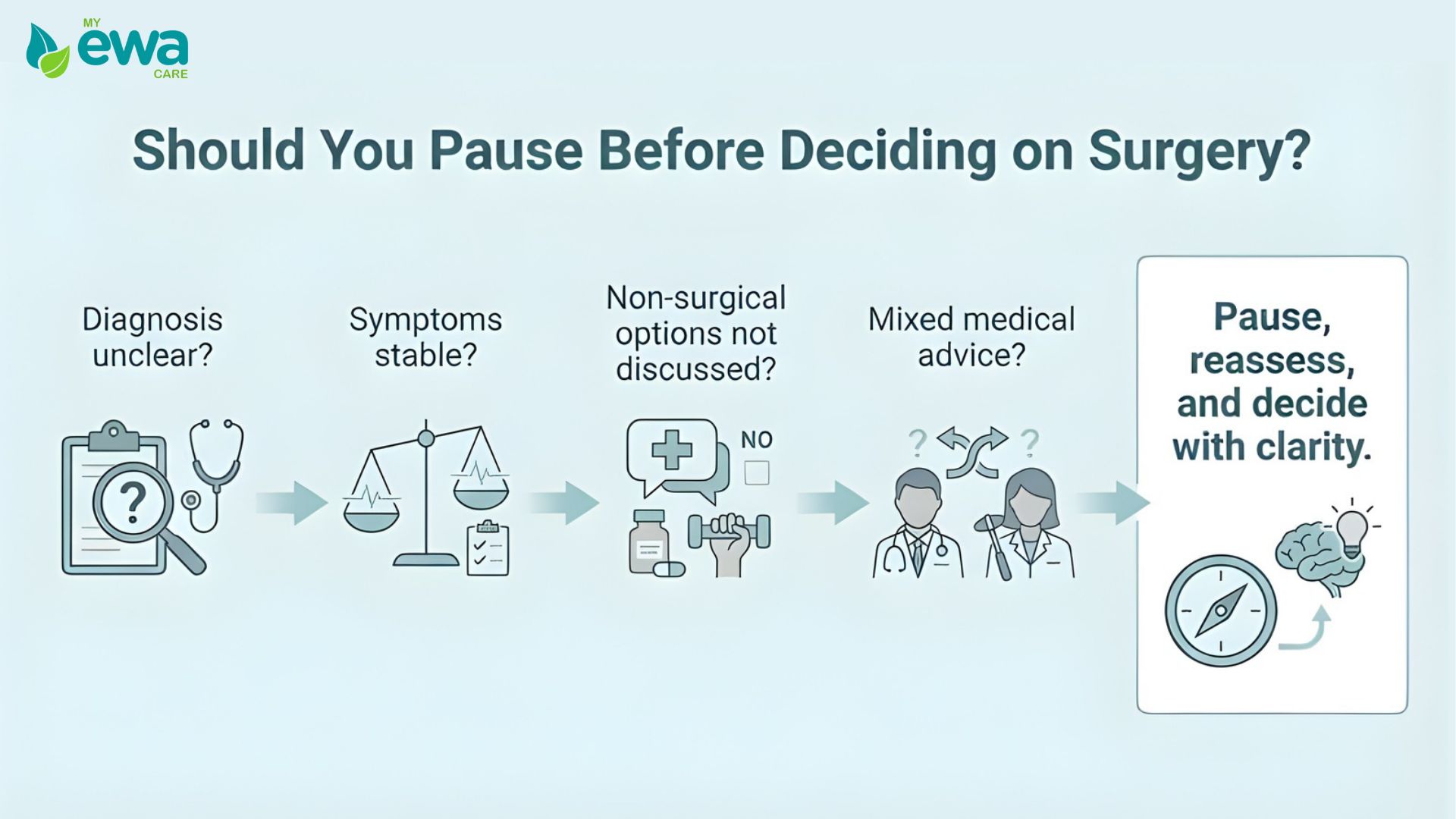
Signs You Should Pause Before Agreeing to Surgery
Pausing doesn’t mean refusing treatment. It means recognizing certain signals that suggest surgery may not be the immediate next step.
Below are key signs to pause before surgery and re-evaluate the decision.
1. The diagnosis is based on limited or outdated tests
A surgical recommendation should rest on clear, current evidence.
If the diagnosis relies on:
- very few tests
- scans done long ago
- assumptions rather than confirmed findings
it may be worth slowing down.
When tests are incomplete or outdated, it becomes harder to know how to know if surgery is necessary. Accurate diagnosis is the foundation of any surgical decision.
2. Surgery was recommended very quickly
If surgery is suggested almost immediately — sometimes in the first consultation — without detailed explanation, this can be a warning sign.
Good medical decisions take time. When surgery is recommended too quickly, without discussion of progression, risks, or alternatives, it’s reasonable to pause and ask whether surgery is needed right now or whether further evaluation could help.
3. Non-surgical options were not discussed
In many conditions, surgery is not the first or only line of treatment. Medication, physiotherapy, lifestyle changes, monitoring, or minimally invasive approaches may be effective, especially in early or moderate stages.
If non-surgical options before surgery haven’t been mentioned at all, it raises an important question: can surgery be avoided, at least for now? Understanding all available paths helps you make a balanced choice.
4. Your symptoms are stable or not worsening
Surgery is often recommended when symptoms are severe, progressive, or significantly affecting daily life. If your condition feels stable — pain is manageable, function hasn’t declined, or symptoms aren’t worsening — it may indicate that surgery can be delayed safely.
These are common signs surgery may not be needed immediately. Stability doesn’t rule out surgery forever, but it does support the idea that timing matters.
5. You are receiving mixed or unclear advice
When different doctors or consultations lead to conflicting recommendations, confusion naturally follows. Mixed advice doesn’t automatically mean anyone is wrong — it often means the situation isn’t straightforward.
If you’re unsure how to decide if surgery is needed, this uncertainty itself is a signal to pause, gather clarity, and consider taking a second opinion before rushing into an irreversible decision.
6. You feel pressured, rushed, or unheard
Sometimes the strongest warning signs aren’t medical — they’re emotional. Feeling rushed, dismissed, or unable to ask questions comfortably can indicate that the decision process isn’t fully patient-centered.
Knowing when not to rush into surgery includes listening to your own discomfort. A decision this important should feel informed, not forced.