
Patient-200
No Medical Care and None of His Prescription Medications for 8 days at Sunrise Hospital
Patient-200 went to Sunrise Hospital in labor, with contractions five minutes apart. They sent her away four days in a row, in excruciating pain. She told them something was wrong, but they would NOT listen which resulted in a dangerous C-section. They forced the patient to walk down 5 floors. Her incision opened up. Patient went to a different hospital for help. Warning to others if you are thinking about having a baby at Sunrise Hospital.
On May 31, 2022, my wife went into preterm labor.
For 4 days, she kept going in because the contractions were 5 minutes apart and wouldn't stop. She was in excruciating pain.
They kept sending her home due to her not dilating. The 2nd day she felt something was wrong as she wasn't feeling pressure where it should be when in labor. Instead, it felt like her left hip was being broken.
She begged them to check on our son and do an ultrasound. They refused and discharged her again because she wasn't dilating.
On the 4th day, she went in, in the morning, and was discharged again --- within an hour.
They again refused to check and do an ultrasound.
By that evening, a doctor finally admitted her.
She was in labor in the hospital room for 8 hours before they decided to go for emergency C-section.
Our son was lodged into her hip, and the cord was wrapped around his neck!!
If it wasn't for my wife and I being so persistent, our son could have died!!!
After giving birth, she caught a fever and (allegedly) tested positive for COVID. No one told us that I couldn't come back in if I left due to her being COVID positive.
Note to readers: It was May 31, 2022, did the wife really have COVID? If she did, Sunrise Hospital did NOT follow COVID protocols.
I continued to come and go as I was working. No one said anything. Not security. Not any of the nurses. In fact, they greeted me each time I came back.
When it was time for her to be released on the night of June 2nd, the nurse came in and was screaming at her while she was holding our 2-day-old son --- saying I wasn't allowed in the room and she needed to figure a way home.
She screamed at her for 15 mins and blamed her for me being let back in her room as a visitor for those 2 days and refused to let me in to help her down to the car.
When my wife replied saying that wasn't her problem because she wasn't told anything and she doesn't work there, the nurse responds with "It is your problem, and you're not going to get me in trouble for your incompetence."(My wife was on the phone with me, so I heard the entire interaction.)
My wife, who is in pain and still has a fever holding our crying son as this nurse is screaming at her, asked for a new nurse because she didn't feel comfortable with this lady anymore and didn't want her pushing her down to the car in the wheelchair.
This lady refused to get anyone else and forced my wife (who just had a C-section only 2 days ago) to walk down to the main entrance which is like 4 or 5 floors down!!!
Her incision opened up because of this!!
We left and went to a different hospital for treatment.
Thank God she didn't go back to Sunrise Hospital to get treated for that.
If you are thinking about having your baby here, I would advise against it.
My wife was completely traumatized by the treatment of the nurses and doctors.
Warning to others if you are thinking about having a baby at Sunrise Hospital
Patient-200 went to Sunrise Hospital in labor, with contractions five minutes apart.
They sent her away four days in a row, in excruciating pain.
She told them something was wrong but they would NOT listen which resulted in a dangerous C-section.
They forced the patient to walk down 5 floors.
Her incision opened up.
Patient went to a different hospital for help.
Patient-200 went to Sunrise Hospital in labor, with contractions five minutes apart. They sent her away four days in a row, in excruciating pain. She told them something was wrong but they would NOT listen. Resulted in a dangerous C-section. Forced the patient to walk down 5 floors. Incision opened up. Patient went to a different hospital for help.
Warning to others if you are thinking about having a baby at Sunrise Hospital.
Just say NO to Sunrise Hospital
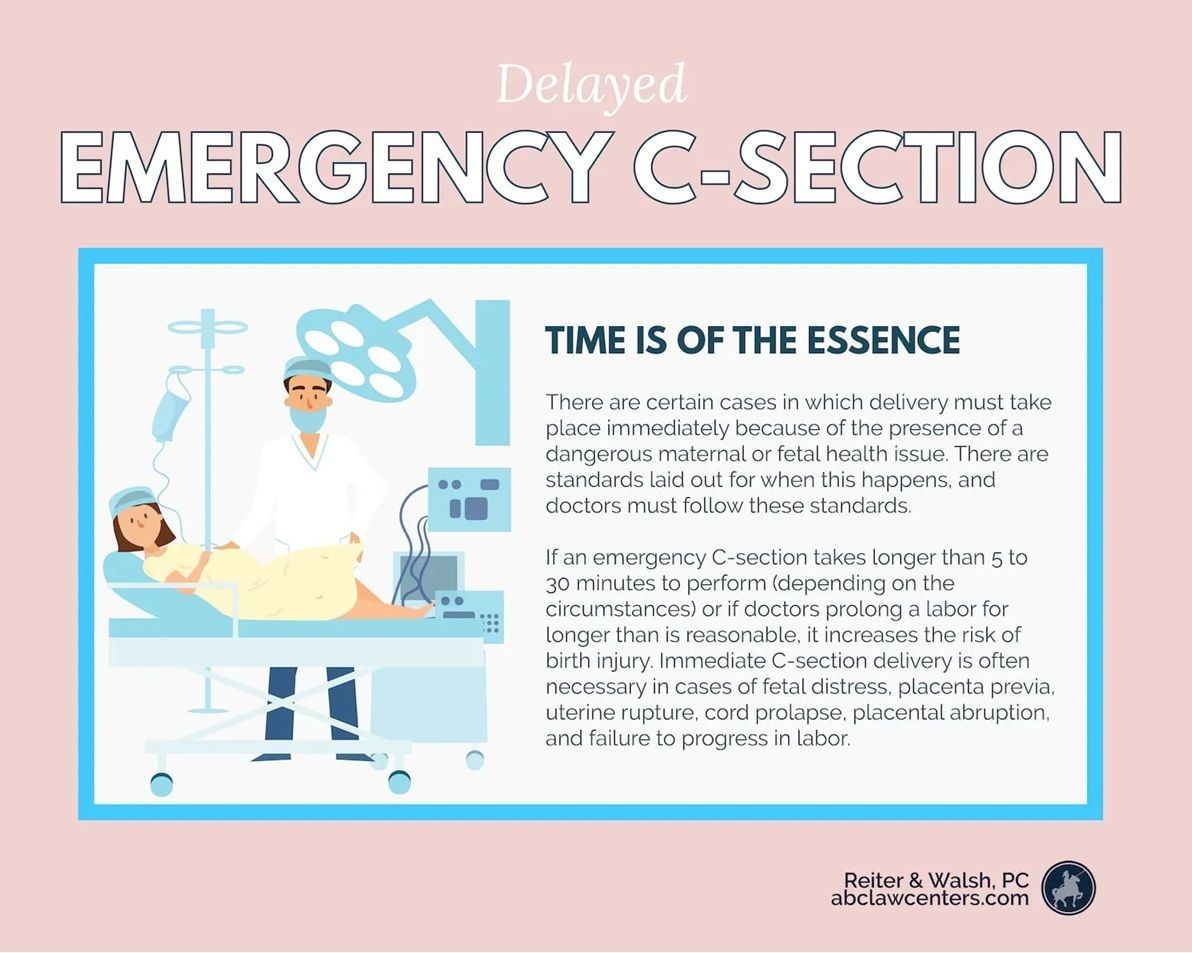
When are Emergency
C-sections Necessary?
Many critical situations can occur during labor and delivery that require an emergency C-section. Once recognized, the medical team must take immediate action to deliver the baby via C-section.
The most common complications include:
Fetal distress
Placental abruption
Uterine rupture
Cord prolapse (this happened with Patient-200)
Prolonged or arrested labor (this happened with Patient-200)
Placenta previa
Role of Fetal Monitoring in Preventing Birth Injuries
Fetal monitoring is used throughout labor and delivery to assess whether a baby is getting enough oxygen. Medical teams rely on fetal monitors to detect potential distress or signs that the baby is not receiving enough oxygen. By monitoring fluctuations in heart rate and other indicators, healthcare providers can quickly recognize if the baby is under stress and if any interventions are needed to prevent complications.
Importance
When fetal monitoring is conducted properly, it can be a lifesaving measure for the baby. An abnormal heart rate or changes in other monitored signs are often early indicators that a baby may be experiencing issues, such as oxygen deprivation or pressure on the umbilical cord. These alerts allow medical professionals to act swiftly—by repositioning the mother, administering fluids and oxygen, or, if needed, deciding to perform an emergency C-section. Properly reading and interpreting fetal monitoring data is essential to ensure that the baby’s health is protected throughout the labor process.
Possible Failures
Unfortunately, there are cases where medical teams may miss, misinterpret, or fail to act on the signs of fetal distress. When this happens, the baby may endure prolonged periods of distress, leading to oxygen deprivation and, in severe cases, permanent injuries such as cerebral palsy or hypoxic-ischemic encephalopathy (HIE).
Failing to respond to distress signals, delaying action, or neglecting to monitor the baby’s condition at regular intervals may constitute negligence. When such lapses result in injury to the baby, families may have grounds to pursue a birth injury claim, as medical professionals are responsible for upholding the standards of care that protect both mother and child during delivery.