
Patient-300
No Medical Care and None of His Prescription Medications for 8 days at Sunrise Hospital
Patient-300 went to Sunrise Hospital. Mistakes were made during the CT scan, causing severe injuries to the patient --- contrast induced extravasation injury --- due to radioactive iodine leaking into the patient's tissue. Severe illness, red blisters on the face, numbness and bluish color, pain in extremities and face, and motor skills were severely affected. The Patient Advocate admitted the records were falsified and promised an investigation would be done, but it never happened.
Patient-300 went to Sunrise Hospital and had a CT scan. Mistakes were made, causing severe injuries to the patient due to contrast induced extravasation and other drugs and medication that were given to the patient after the injury occurred.
Here is the patient's story that was posted on social media:
Is anyone here familiar with "contrast induced extravasation injury," and what to do if the symptoms are still present 5 weeks later?
It's a rare thing, during CT and MRI scans, when radioactive contrast leaks outside of the vein and into the tissue.
Oral antihistamines and steroid creams (prescribed by my dermatologist) do NOT help with pain in extremities and frozen sensation in the face/bluish lips/nail beds.
Horrid feeling of being "poisoned," and nothing I try to do helps.
I was told by my pharmacist that a lot of physical activities and sweating will slowly get rid of that poisoning if the tissue death is not permanent!!!
That sounds scary!!
It's a very rare thing, and I would like some advice.
Any doctors here?
Any surgeons? (Surgeons poke holes and make cuts in you for this poison to come out.)
In my case, it was a CT scan. It was iodine leaking into the tissue.
They had my arm up as it was not going into the vein, but they never took the needle out.
I was poked 5 times and covered in blood as the nurse kept missing my vein.
She gave me peroxide in order to clean the blood, and my blouse was bloody all over.
Peroxide did not help.
That radioactive iodine contrast that leaked during the CT scan was followed by and IV with clear fluids (30 minutes in the Emergency Room) and a large glass of white substance --- that caused me to lose all motor skills.
The next morning, I had red blisters all over my face and a lot of numbness/bluish color/pain in my face and extremities, and almost no pulse.
The blisters went away, but the pain and numbness is still there on my hands and face.
I hope it's not permanent tissue damage.
I am looking for advice.
This procedure was done in the Emergency Room at Sunrise Hospital. They are lying in my medical records. The Patient Advocate admitted the records were falsified and promised an investigation. (It's not likely they will ever do an investigation.)
On the medical records, it lists the name of the doctor as Dr. Shahid, but I never met him at Sunrise Hospital.
Please let me know if there are any home remedies for contrast induced extravasation poisoning followed by a large glass of lidocaine, with whatever other meds, that made me lose my motor skills.
I sat in the parking lot for a long time before I was able to drive home. I was completely "wasted" from being poisoned by Sunrise Hospital.
It's terrible how Sunrise Hospital did this to me, falsified my records, and allowed me to drive in such a dangerous condition.
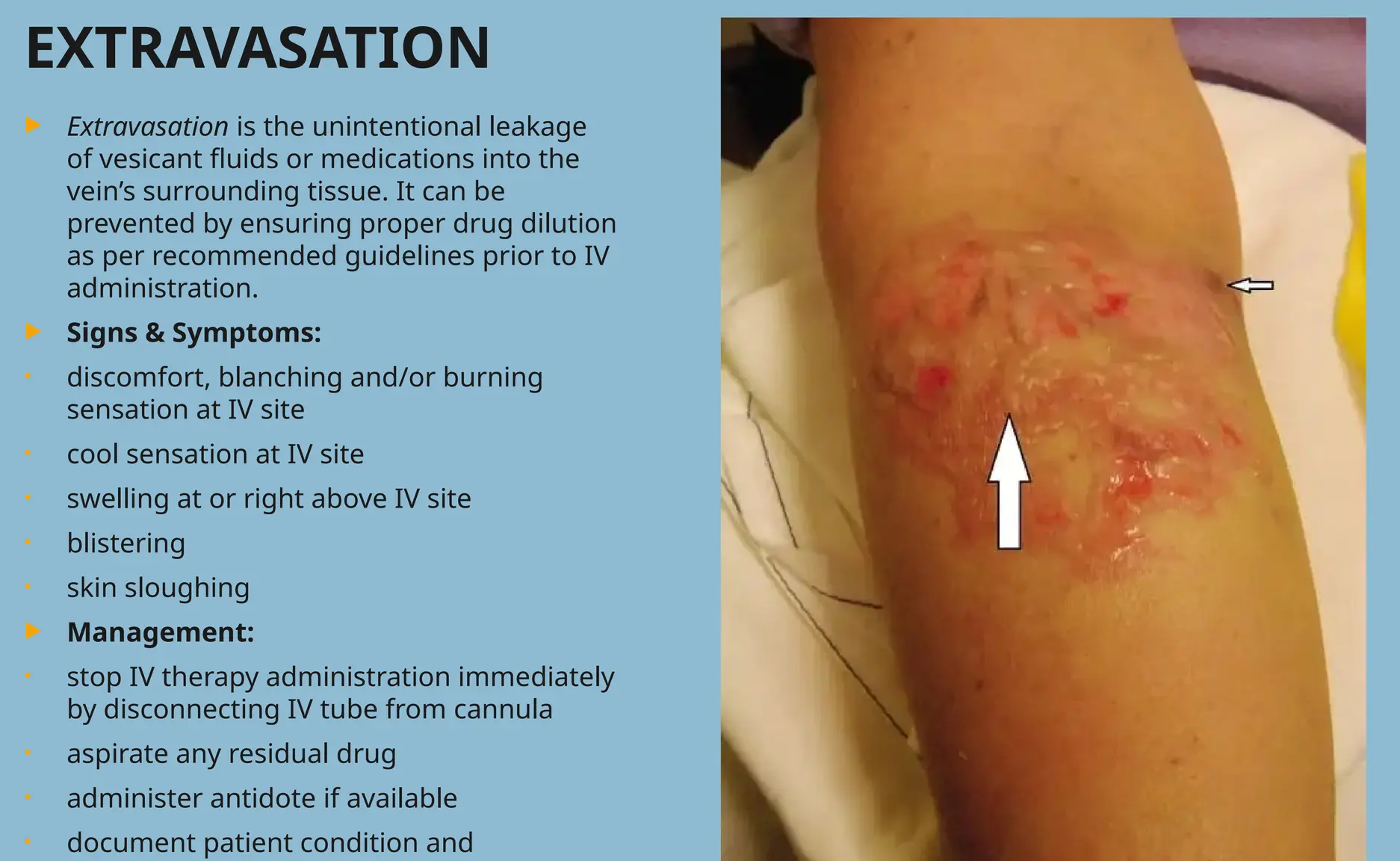
Patient-300 went to Sunrise Hospital. Mistakes were made during the CT scan, causing severe injuries to the patient --- contrast induced extravasation injury --- due to radioactive iodine leaking into the patient's tissue. Severe illness, red blisters on the face, numbness and bluish color, pain in extremities and face, and motor skills were severely affected. The Patient Advocate admitted the records were falsified and promised an investigation would be done, but it never happened.
This is a stock photo of an extravasation injury. The injuries to Patient-300 were much more severe than what is shown in this stock photo.
Just say NO to Sunrise Hospital
Contrast Media Extravasation: Prevention, Recognition, and Management
Contrast extravasation is the unintentional leakage of contrast medium from a blood vessel into perivascular or subcutaneous tissue.
Rare severe injuries include compartment syndrome, skin ulceration, and tissue necrosis; severity cannot be predicted from volume alone.
Common mechanisms include:
- Catheter dislodgement: The IV catheter partially or fully pulls out of the vein during injection, especially during arm movement or catheter manipulation.
- Venous injury or rupture: The vein wall is breached, particularly in a small, fragile, damaged, or previously punctured vein.
- Catheter malposition: The catheter tip is positioned outside the vessel lumen (e.g., through the back wall of the vein), so contrast flows directly into the tissue from the start.
One of the risk factors include multiple prior IV attempts: Veins that have been punctured multiple times are more likely to leak. (This was the case with Patient-300 who was poked 5 times.)
Severe cases can include progressive pain or swelling, decreased capillary refill or other impaired perfusion, altered sensation, worsening active or passive motion, blistering, ulceration, and tissue necrosis.
In severe cases, surgical management may be required.
Do not discharge an outpatient until an initial observation period shows that findings are stable or improving and the responsible clinician is satisfied with discharge. Provide clear written instructions on where and when to seek care for severe or progressive pain or swelling, numbness or tingling, reduced active or passive motion, blistering or ulceration, or any other circulatory or neurologic change.
Severe injury can evolve over hours.